Your AI uses energy. Here's what we're doing about it.

Every paid We love blue plan will fund blue ecosystem projects: the underwater climate super heroes we need more of.

What we could fund together

These are estimates, not results. What 100, 200, 500 or 1,000 Pro subscriptions could fund each year once our restoration partnership is signed. Sources are listed at the foot of the page.
If we had this many Pro subscribers

254.9 m²

of ocean forest regenerated.

That's about 20 parking spaces, or roughly 1.0 tennis courts
1,200

Mangrove trees planted/year

  • 6 km of coastal protection against storm surge and erosion
  • These trees will capture ~14.2 tonnes CO₂/year (and more as they mature)²
171

Corals planted/year

  • 86 m² of new reef habitat created
  • About 7 m²/month added to reef ecosystems
Why blue ecosystems?

Blue ecosystems are the ocean's version of rainforests
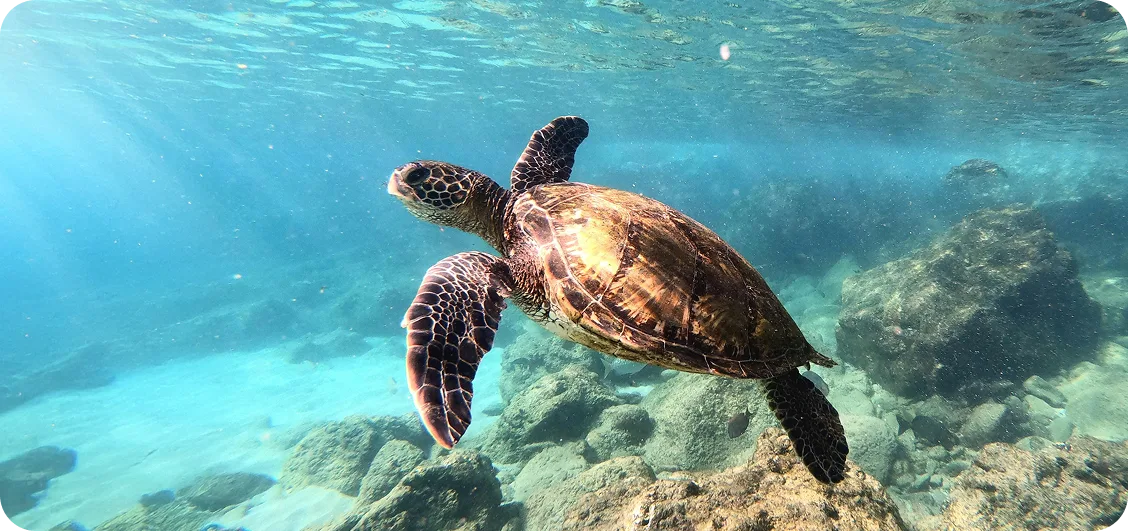
A sea turtle gliding over a shallow reef

Mangroves, seagrass meadows, kelp forests, and coral reefs. They're even better than rain forests at storing carbon.

Here's the wild part:

  • Seagrass meadows cover only 0.1% of the ocean floor but store 11% of ocean carbon.³
  • Mangroves sequester carbon at 4× the rate of tropical rainforests.²

But they don't stop there. They also shield coastlines from storms, create nurseries for fish, filter pollution, and support ridiculous amounts of marine life.

Why mangroves?

Mangroves are the ocean's climate heroes
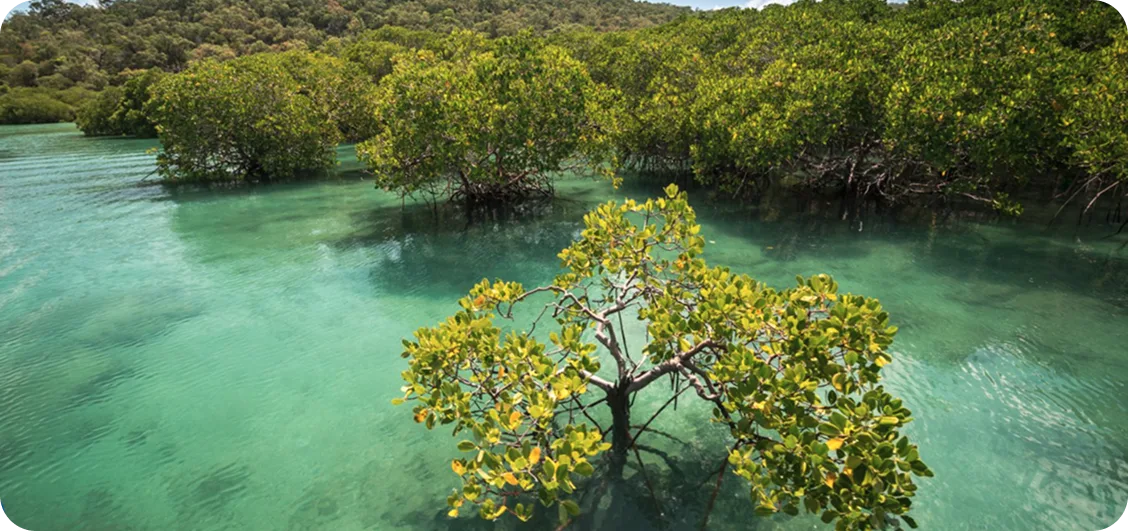
A young mangrove tree standing in clear turquoise shallows
  • Absorb carbon 4× faster than regular forests²
  • Store 3–5× more carbon per area²
  • Protect coastlines from storms
  • Create homes for fish and wildlife
Why corals?

25% of all marine life depends on coral reefs
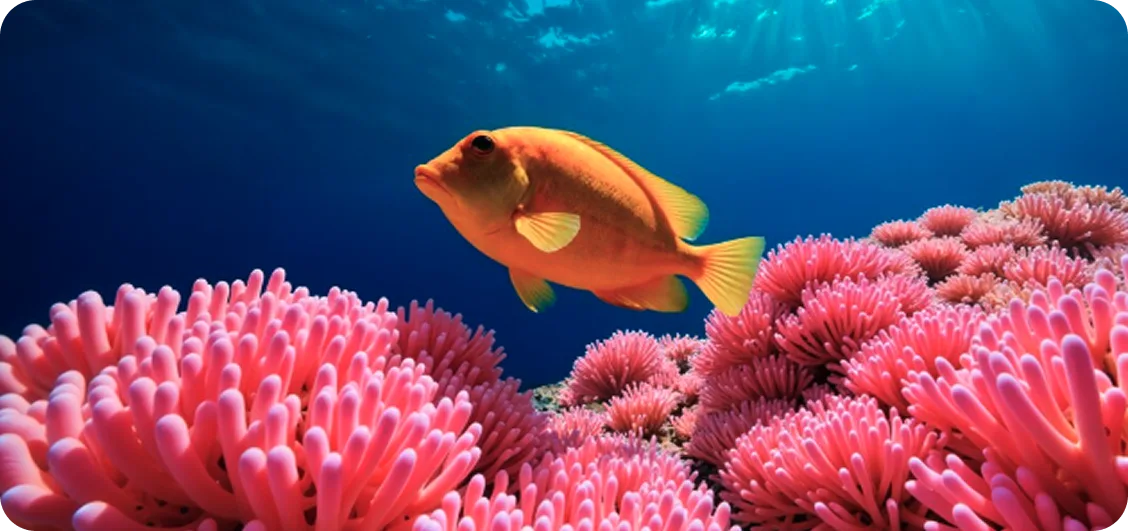
A fish swimming above a pink coral reef
  • Cover less than 1% of the ocean floor⁴
  • Support a quarter of all ocean life⁴

Tiny reefs. Huge impact.

Our partners

We're building partnerships with ocean restoration organisations that plant real trees and coral fragments in real places.


Sources
  1. de Vries, A. (2023). The growing energy footprint of artificial intelligence. Joule, 7(10), 2191–2194. https://doi.org/10.1016/j.joule.2023.09.004
  2. Donato, D.C., Kauffman, J.B., Murdiyarso, D., Kurnianto, S., Stidham, M., & Kanninen, M. (2011). Mangroves among the most carbon-rich forests in the tropics. Nature Geoscience, 4, 293–297. https://doi.org/10.1038/ngeo1123
  3. Fourqurean, J.W., Duarte, C.M., Kennedy, H., et al. (2012). Seagrass ecosystems as a globally significant carbon stock. Nature Geoscience, 5, 505–509. https://doi.org/10.1038/ngeo1477
  4. Knowlton, N., Brainard, R.E., Fisher, R., Moews, M., Plaisance, L., & Caley, M.J. (2010). Coral Reef Biodiversity. In Life in the World's Oceans: Diversity, Distribution, and Abundance (ed. A.D. McIntyre). Wiley-Blackwell.
  5. Mcleod, E., Chmura, G.L., Bouillon, S., et al. (2011). A blueprint for blue carbon: toward an improved understanding of the role of vegetated coastal habitats in sequestering CO₂. Frontiers in Ecology and the Environment, 9(10), 552–560. https://doi.org/10.1890/110004
  6. Pendleton, L., Donato, D.C., Murray, B.C., et al. (2012). Estimating global "blue carbon" emissions from conversion and degradation of vegetated coastal ecosystems. PLoS ONE, 7(9), e43542. https://doi.org/10.1371/journal.pone.0043542
  7. UNESCO & UCL (2025). Smarter, smaller, stronger: resource-efficient generative AI and the future of digital transformation. UCL news summary, 8 Jul 2025. https://www.ucl.ac.uk/news/2025/jul/practical-changes-could-reduce-ai-energy-demand-90