For people who use AI and also care about the planet
An AI tool that actively generates a positive impact on the environment
AI is now part of daily life. People use it to plan workouts, find recipes, write bedtime stories for their kids.
The big AI companies keep racing toward the next, better model. But a better model isn't the whole story. How people actually use AI, and what that use costs the planet, matters just as much.
Less energy wasted, and plans that will fund blue ecosystem restoration
Many AI models in one tool
Instead of running every task through one energy-hungry AI, we've organised your AI into different tasks. The most energy-intensive models only kick in when you actually need them.
Work spaces help you stay organised
We love blue gives you contextual workspaces built for what you're actually trying to do. Writing, researching, deciding and building each need different AI models, and we handle that choice for you.
Eco mode
Not every question needs your AI running at full power. Eco Mode lets you match the effort to the task, so you're not burning resources on something that didn't need them.
AI's energy cost, honestly
A standard Google search runs at around 0.3 watt-hours. A single AI query can use meaningfully more, up to 10 times as much by some widely cited estimates¹. Multiply that across billions of daily queries and the number stops looking small.
That is why We love blue routes each task to a model that fits it, and why every paid plan will fund mangrove planting, coral restoration and ocean forest regeneration.
Restoring blue ecosystems — an efficient climate solution
Vegetated coastal ecosystems cover a fraction of the world's forest area, but sequester carbon at rates that match, and often beat, land-based forests⁵.
Mangroves — the climate superheroes
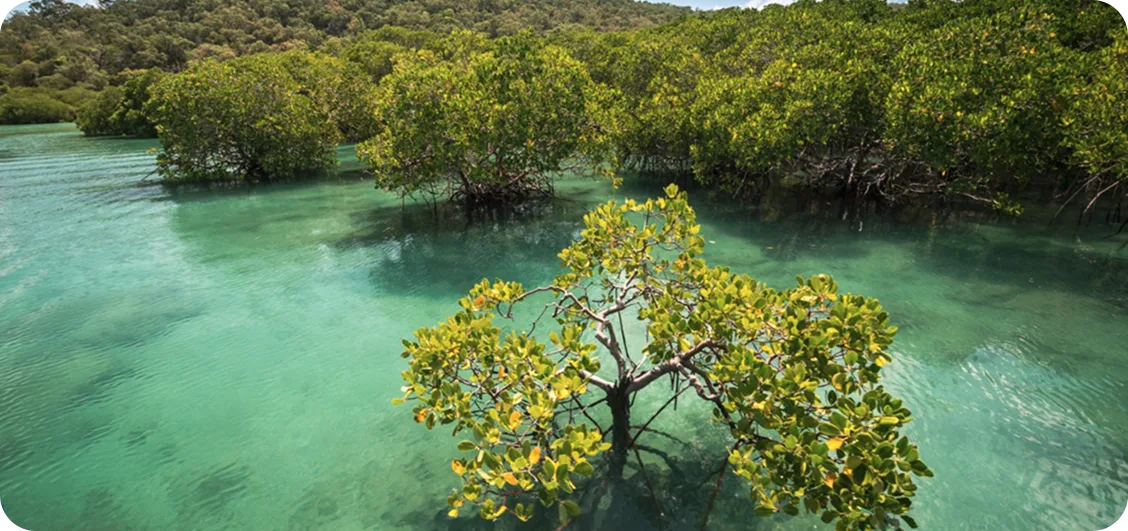
Mangroves absorb 4× more carbon than regular forests
- Mangroves store an average of 1,023 megagrams of carbon per hectare, up to 4 times more than most other tropical forests, largely because of the deep, waterlogged soil beneath them². Per unit area, they can sequester carbon faster than many terrestrial forests.
- Mangrove forest area has declined by 30 to 50% over the past 50 years², and blue carbon ecosystems as a whole lose roughly 0.5 to 3% of their global area every year⁶, among the fastest rates of any ecosystem on the planet.
The ocean and blue ecosystems
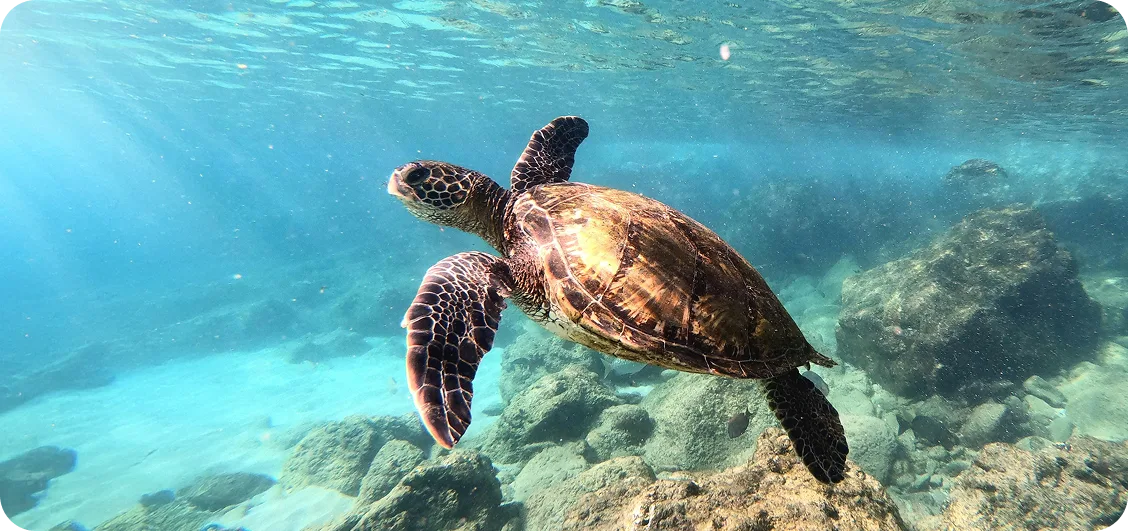
Oceans produce more than half of Earth's oxygen
- Seagrass meadows cover a fraction of the seafloor but hold a globally significant share of ocean carbon³.
Coral reefs
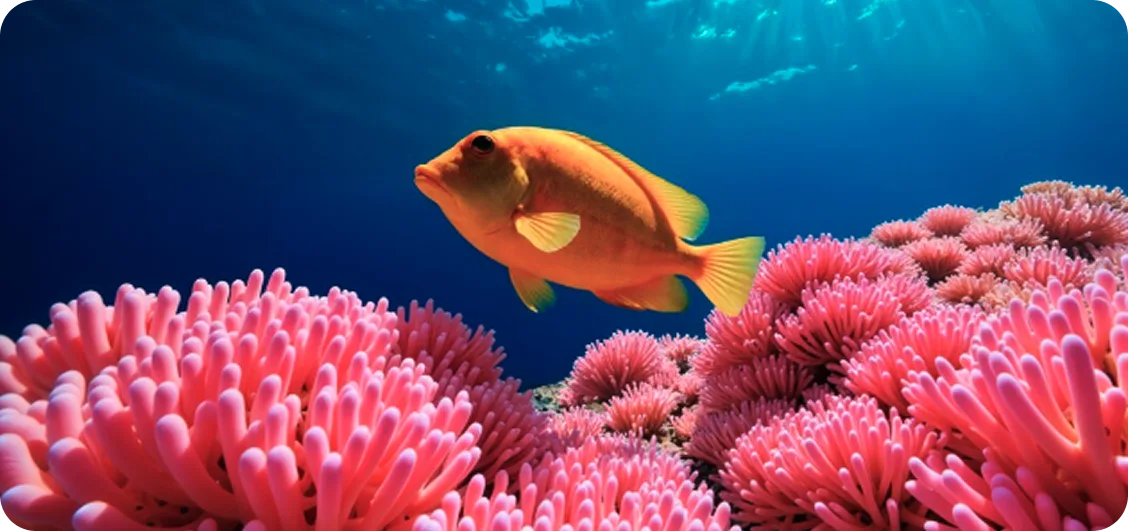
Home to 25% of all marine life
- Reefs cover less than 1% of the ocean floor yet support around a quarter of all marine species⁴.
We will fund community-led ocean restoration projects
We're building partnerships with scientific ocean restoration organisations running community-led projects in Indonesia, Colombia, the Philippines, Kenya and Belize. We'll name them here once the agreements are signed.

Bring your people. Together we can plant more mangroves, seagrass and coral
Every person you invite doubles the restoration work we can fund. More people using We love blue means more coastline protected, more habitat restored, and a measurable dent in ecosystem loss. Individually small, collectively significant.
Technology should give back more than it takes
AI adoption isn't slowing down. The relevant question is what that growth costs the planet at scale, and what we do about it. We built We love blue so that using AI leaves behind a measurable, positive footprint instead of just an invisible one.